Are watch winders good for automatic watches?
Watch winders: the answer depends on what you own.
The watch winder market is built on a misunderstanding. Most automatic watches do not need one. A handful genuinely do. Knowing which category your watch falls into is more useful than any product review.
Here is the mechanical reality. An automatic movement stays wound through the movement of your wrist during normal daily activity. Remove the watch and it continues running on its stored power reserve — anywhere from 38 to 72 hours depending on the caliber — then stops. That stop is not a problem. It is not harmful to the movement, the oils, the mainspring, or any other component. Mechanical movements have been stopping and restarting for centuries. It is what they do.
A winder keeps the rotor spinning continuously. For a standard three-hand automatic, this means adding motor vibration, rotor wear, and perpetual microshocks to a movement that would be perfectly content sitting still on your nightstand. The rotor bearings accumulate mileage they did not need to accumulate. The mainspring stays under tension it did not need to sustain. The net result is unnecessary wear on a movement that was causing no problems in the first place.
The calculation changes completely for grand complications.
A perpetual calendar, an annual calendar, an equation of time, a watch with astronomical indications — these are different objects entirely. Allowing a perpetual calendar to run down means resetting moon phases, date displays, day and month indicators, sometimes leap year cycles, all of which must be advanced manually through a sequence that varies by manufacturer and that, performed incorrectly or at the wrong moment in the calendar cycle, can damage the delicate components involved. The window during which calendar corrections are safe is typically several hours wide. Outside that window, forcing an adjustment can strip a wheel or lever that costs more to replace than most watches cost to buy.
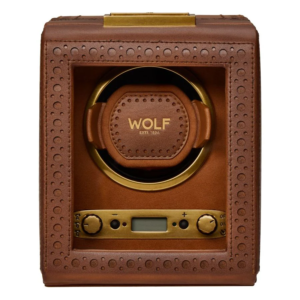
For complications of this level, dedicated winding systems make genuine sense. Not the winders sold as accessories alongside watch rolls and leather trays. The systems produced by Buben & Zorweg, Döttling, and Elma — climate-controlled, humidity-regulated, with programmable rotation sequences and vibration dampening engineered specifically for high-complication movements. These begin at approximately €5,000 and reach considerably higher. On a watch worth €150,000 or more with a perpetual calendar that would require expert intervention if damaged, that expenditure is not indulgence. It is maintenance logic.
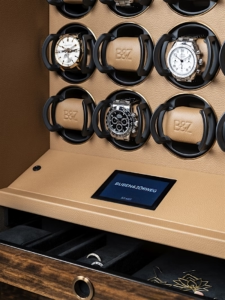
The practical rule: a standard automatic worn regularly needs a nightstand, not a winder. A grand complication rotated among several pieces, with calendar functions that require precise resetting, benefits from a quality system designed for the purpose. The difference between those two objects is the difference between a solution and a problem that does not exist.