Why Serious Watch Collectors Steer Clear of Fashion Brands
The core issue is straightforward: most fashion watches aren’t really watches in the technical sense — they’re brand names attached to objects that happen to tell time.
That distinction can sound overly fussy until you understand what a collector actually looks for when examining a piece. They’re not just reading the logo. They study the movement — its internal architecture, the quality of its components, the craftsmanship behind it. They study the case — the finishing, how light plays across its surfaces, whether the proportions feel deliberate. They study the dial — whether the markers are applied by hand or simply printed, whether the hands have genuine depth or are flat stamped pieces. Essentially, they’re asking: was this made by someone who understands horology, or by someone who understands licensing deals?
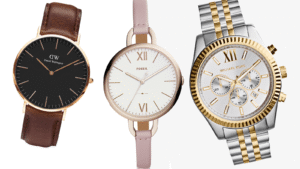
Fashion brands, almost without exception, fail that test. Not because they’re being deceptive — many are perfectly upfront about what they sell — but because the movement typically comes from the cheapest available supplier, the case is designed to catch the eye rather than honor watchmaking logic, and the name on the dial is carrying the entire value proposition. A Fossil, a Michael Kors, a Daniel Wellington is selling a lifestyle, not mechanics. The watch is the delivery vehicle; the brand is the actual product.
And to be clear, this is a perfectly valid business model. Millions of people buy fashion watches and are completely happy with them — as they should be, since they’re getting exactly what was promised: a recognizable name on the wrist at an affordable price. The issue isn’t the product itself. It’s the confusion that arises when these watches get judged against horological standards they were never built to meet.
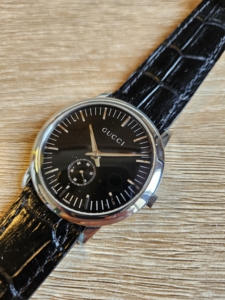
There are exceptions, of course. Certain fashion labels have, at particular points in their history, released pieces with real horological substance — a movement choice that went beyond what the category demanded, a collaboration that brought genuine expertise into the design process, a detail that revealed actual respect for watchmaking tradition. Someone with a trained eye knows how to spot these outliers, because they know what signals to look for. A run-of-the-mill piece from a fashion label is still just a fashion accessory. That same label, paired with a serious mechanical movement underneath, is an entirely different animal.
A concrete example illustrates this well: certain pieces from major fashion houses house a respectable Swiss mechanical caliber — one whose component cost alone runs into the hundreds of dollars — with “Swiss Made” confirming both the movement’s origin and its assembly took place in Switzerland. A final price tag well above a thousand dollars, in cases like this, is backed by genuine technical substance. A generic fashion watch selling for a few hundred dollars, despite occupying the same shelf, has nothing comparable happening beneath the case back.
The real skill lies in making that distinction. Dismissing everything fashion-branded out of hand is lazy. So is accepting everything at face value. The interesting work is figuring out what you’re actually holding, why it was built the way it was, and what that reveals about the people who made it.
That kind of discernment is what separates someone who simply wears watches from someone who actually understands them. And it’s a skill that can be learned — one that, once acquired, permanently changes the way you look at a watch.